01.Aruba Condominiums (What Most Foreign Buyers Mean by Condo)
In Aruba, a condominium usually means whole ownership of an individual unit inside a shared building/community, with common areas managed by an association (often referred to as HOA/condo association). You own your unit, and you pay ongoing fees for shared expenses like security, pools, elevators, landscaping, and reserves.
The important twist in Aruba is land type: some condos sit on property land (freehold) and others on long lease land (erfpacht/lease land), which affects ongoing costs and the paperwork you’ll see during buying.
02.Why Invest in Aruba Condos?
Most condo investors come to Aruba for a simple reason: condos are lock-and-leave real estate. They’re typically easier to maintain than standalone homes, and many buildings are designed around vacation living (security, pools, onsite services, strong location).
Two reality checks to keep this advice accurate:
- Aruba’s government has been moving toward the regulation/registration of vacation rentals to maintain standards and a level playing field. In an official update, the government described a policy approach based on registration to operate.
- Your rental success is often decided by building rules (HOA policies, minimum stays, guest rules), not just the beach distance.
If your goal is vacation rentals, focus on: location + building rules + management plan (more on this below).
03.Is It Worth Buying a Condo in Aruba?
It can be worth it if you fit one of these profiles:
- Vacation + rental combo: you use the condo for a few weeks, rent it the rest.
- Long-stay seasonal lifestyle: you want Aruba as your winter base or part-time home.
- Investor with clear numbers: you budget HOA + taxes + management realistically and choose a proven location.
It’s usually not worth it if:
- You hate HOA rules and prefer full control (condos always have shared governance).
- You’re buying based on best-case rental income without verifying HOA rental rules and ongoing costs.
04.Can a US Citizen Buy a Condo in Aruba?
Yes. Non-residents (including US citizens) can buy property in Aruba, and the buying process is generally the same as for residents.
What surprises most US buyers is the legal structure:
- Aruba uses a civil-law notary system for real estate transfers. The deed is executed by the notary and registered in the public registers, that registration date is when the title is actually transferred.
- Transfer tax is typically paid to the notary, who then pays it to the tax authorities.
That’s why choosing a good local team (realtor + notary + sometimes an attorney, depending on complexity) matters.
05.How to Buy a Condominium in Aruba as a US Citizen (Step-by-Step)

Buying a condo in Aruba as a US citizen is absolutely doable, but the process feels different from the U.S. because Aruba is notary-driven. In plain terms, you don’t become the legal owner just because you signed an agreement; the ownership transfer becomes official through a notarial deed and the public register.
5.1 Choose the right area based on your goal
This is where most buyers either win or waste months. Aruba condos behave very differently depending on who you’re buying for: yourself, long-stay renters, or short-term vacation guests.
- If your plan is vacation rental income, focus on areas where visitors already want to stay and where the condo lifestyle fits short-term guests (walkability, restaurants, beach access, amenities).
- If your plan is long stays (snowbird living, remote work, 1–6+ month rentals), prioritize daily-life convenience: grocery access, parking, quieter building rules, and practical layouts.
- If your plan is personal living, don’t buy the most “touristy” location just because it rents well, buy where you’d actually enjoy regular routines.
A local realtor’s job at this stage is to help you match area + building type + rules to your goal, so your condo doesn’t become an expensive compromise.
5.2 Confirm land type early (property land vs lease land)
In Aruba, condos can sit on property land (freehold) or lease land (erfpacht/long lease). Leasing land is very common in prime areas and is typically structured as a 60-year lease with a yearly fee; after the term, it can be extended, and the yearly fee can change.
This matters because land type affects:
- Your ongoing annual costs (lease fee vs property tax structure)
- What you should ask the seller/HOA/notary for documentation
- How a lender may view the purchase (if you’re financing)
The key is not that leased land is bad (it isn’t), the key is knowing exactly what you’re buying and what the yearly obligations are before you commit.
5.3 Verify HOA rules before you fall in love with the unit
Investors often focus on the view and forget the rulebook, then get surprised later. Before you treat a condo as a rental asset, you must confirm:
- Rental rules: Are short-term rentals allowed? minimum nights? Any registration requirements inside the building?
- Occupancy and guest rules: limits, noise policies, party rules
- Pet rules: if this matters to you or your renter profile
- HOA finances: budget, reserves, and whether there’s a pattern of special assessments for big repairs
This is also where you protect yourself from the most common new buyer mistake: buying into a building that looks great today but has weak reserves or unclear maintenance planning.
5.4 Execute the official transfer through a notary
Here’s the part that’s most important for US buyers to understand: Aruba’s conveyancing system runs through a civil-law notary.
- The ownership transfer is completed via a notarial deed.
- After signing, the notary registers the executed deed in Aruba’s public registers, and that registration is what legally records you as the owner.
So, if you want a simple north star concept, registration in the public registers is what locks in ownership in official legal terms.
5.5 Close cleanly, pay transfer tax properly, and budget the real monthly costs
At closing, the buyer is typically responsible for transfer tax, and Aruba notary sources explain that the notary includes it in the buyer’s account and pays it to the tax collector.
Reputable sources commonly describe Aruba’s transfer tax as:
- 3% up to AWG/Afl. 250,000
- 6% on the amount above that
And it’s not only about the rate, but some sources also note the tax can be based on the highest value between the transaction value and an appraised/tax value established via the notary process.
After closing, smart buyers immediately set up the real monthly picture: HOA fees, insurance, utilities, and maintenance planning, because that’s what determines whether the condo feels affordable long-term.
5.6 If you plan to rent short-term, plan for compliance and management from day one
If your condo is an investment property, don’t treat renting it out as an afterthought. Aruba’s government has stated it aims to regulate vacation rentals based on registration, requiring owners with listings to register their vacation rentals in order to operate.
That means your rental plan should include:
- A property manager or a clear self-management system
- Guest rules aligned with HOA policies
- Tax/compliance readiness (as requirements evolve)
- Realistic budgeting for turnover costs (cleaning, linens, minor repairs)
Buying a condo in Aruba as a US citizen isn’t complicated once you understand the system. The winners are the buyers who (1) choose the right area for the goal, (2) verify land type and HOA rules early, and (3) treat the notary + registration step as the true “finish line.
06.Legal Process for Purchasing Condominiums in Aruba (What’s Actually Official)
Here’s the official process explained like I’d tell a buyer sitting across the table from me:
- The sale is completed through a civil-law notary. In Aruba, ownership doesn’t transfer with a simple signed contract, the transfer happens through a notarial deed prepared and executed by the notary.
- Registration is what makes you the legal owner. After the deed is signed, the notary registers the executed deed in Aruba’s public registers. That registration is the “official switch” that legally records you as the new owner.
- Transfer tax is handled at closing through the notary. The notary typically collects the transfer tax and pays it onward as part of the closing process.
07.What Are the Maintenance Fees for Aruba Condominiums?
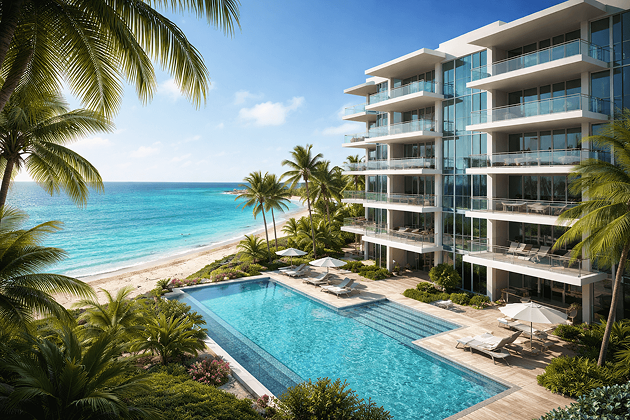
Maintenance (HOA) fees are one of the biggest make-or-break numbers in Aruba condo buying, because they can turn a great-looking price into an expensive monthly commitment. When a buyer asks me, What am I paying for?, here’s the clean way to think about it:
7.1 What Aruba condo maintenance fees usually cover
Most HOA fee structures commonly include:
- Security and shared property maintenance
- Landscaping and grounds upkeep
- Shared amenities like pools, gyms, and tennis courts (if the building has them)
- Maintenance and repairs of common facilities such as gates, elevators, hallways, parking areas, and lighting
7.2 What fees may NOT include (always confirm)
Depending on the building, your HOA fee may not include in-unit utilities (electricity, water, internet), and it usually won’t cover interior repairs inside your unit.
7.3 How to judge if HOA fees are “good” (the realtor way)
Don’t ask: “Is the fee high?”
Ask these three questions instead:
- What exactly is included (security, insurance on common areas, amenities, parking, etc.)?
- How strong are the reserves (does the HOA have money set aside for major repairs)?
- Have there been special assessments in the past (extra one-time charges for big repairs)? Ask for HOA minutes or meeting notes if available.
08.Lease Land vs Property Land in Aruba (Why It Matters Before You Buy a Condo)
This is one of the first things I clarify for foreign buyers, because it affects your long-term costs and the questions you should ask at closing.
8.1 Property Land (Freehold)
Property land means you own the property with the underlying land interest connected to it, this is the most straightforward ownership type.
8.2 Lease Land (Erfpacht / Long Lease)
Leasing land means the land is government-owned and leased to the owner for a long term, commonly 60 years, and you pay a yearly lease fee. After the term, it can be extended/renewed, and the fee may change.
8.3 What actually matters (the buyer checklist)
Leasing land is not bad; it’s common in strong locations. The smart move is to confirm:
- What is the current annual lease fee, and how is it calculated?
- What are the renewal/extension terms and timing?
- If you’re financing, how does your lender treat lease land vs freehold (some lenders have specific requirements)?
09.Best Condo Buildings in Aruba (Vacation Rental & Lifestyle Shortlist)
These are well-known condo communities often chosen for vacation stays and/or second-home ownership. Availability and HOA rules vary by unit and can change, so treat this as a vetted starting point, not a blanket guarantee.
Best Condominium Developments in Aruba for Vacation Rentals:
9.1 Oceania Residences (Eagle Beach area)
Oceania is known for resort-style amenities and a strong location near Eagle Beach. Aruba’s official tourism site lists multiple pools, fitness centers, courts, and family facilities.
If you want “premium vacation rental demand + condo comfort,” this is one of the first places many buyers ask about.
9.2 Azure Beach Residences (Eagle Beach / Palm Beach corridor)
Aruba.com highlights amenities like infinity pools, a gym with ocean view, a tennis court, 24-hour security, and concierge services.
This tends to appeal to renters who want modern comfort and easy access to commercial zones.
9.3 Blue Residences (Eagle Beach corridor)
Blue Residences operators market features like high-speed Wi-Fi, 24/7 security, and reserved parking.
From a renter's perspective, this checks many “vacation-ready” boxes (security, modern feel, beach proximity).
9.4 LeVent Beach Resort (Eagle Beach)
LeVent-style listings frequently emphasize resort-like amenities and family-friendly options (pool/hot tub, playground, fitness, BBQ areas, proximity to Eagle Beach).
Always verify HOA rules per unit if you’re buying specifically to rent.
9.5 Harbour House (Oranjestad)
Harbour House is positioned as an upscale condo building in Oranjestad with amenities like a rooftop terrace and a fitness center, and a pool, noted by major travel platforms.
This is a strong option for buyers who want a downtown lifestyle + easy routines.
9.6 Palm Aruba Condos (Noord / Palm Beach zone)
Palm Aruba markets resort-style amenities, including a fitness center and tennis court.
This can be attractive for value-oriented buyers who still want a community amenities feel.
10.Luxury Condo Resorts in Aruba With Beachfront Access
When buyers ask me for a “luxury condo resort” in Aruba, they usually don’t mean fancy words in a listing, they mean a building that feels premium to renters and stays easy to own.
In Aruba, real luxury typically looks like:
- Strong security and consistently well-kept common areas
- Modern interiors with reliable A/C (non-negotiable here)
- Resort-level amenities (pools, gym, sometimes concierge-style services)
- A location renters instantly recognize, most often the Eagle Beach / Palm Beach corridor
One important reality: luxury often comes with higher HOA/maintenance fees, so your investment math should always include the full monthly cost picture, not just the purchase price.
To see what’s currently available, browse our updated listings here: Condos for Sale.
11.Renting Condominiums in Aruba (Flexible Lease Terms + What’s Realistic)
If you’re searching for a condo rental in Aruba, the most important thing to know is this: flexible lease means different things here, and pricing/terms depend heavily on whether the unit is set up for vacation stays, mid-term living, or true long-term residency.
11.1 Condominium Rental Services in Aruba With Flexible Lease Terms
In practice, rentals usually fall into three categories:
- Short-term: nightly/weekly (vacation style)
- Mid-term: 1–6 months (popular with remote workers and seasonal stays)
- Long-term: 6–12+ months (often structured more like a resident lease)
A key reality renters should understand: some long-term rental providers note that long-term rates often apply to residents registered at Censo with a valid DIMAS permit (or in process), and long-term rentals may exclude utilities unless clearly stated. That’s why many non-residents find mid-term (1–6 months) rentals more realistic than expecting resident-style long-term pricing.
11.2 Best Way to Rent a Condo (Renter Checklist)
Before you send a deposit, confirm:
- Lease term + renewal/extension options
- What’s included (water, electricity, internet, pool/amenity access)
- Deposit, cleaning fees, and HOA/guest rules (quiet hours, occupancy limits)
- Wi-Fi speed if you work remotely
- Parking + security details
- Maintenance response expectations (who fixes what, and how fast)
If you want help, MPG can match you with condos that fit your timeline and budget, and verify rules and inclusions before you commit to condos for rent.
common questions
Frequently Asked Questions
Why invest in Aruba condos?
What is the downside of owning a condo?
What is a disadvantage of owning a condominium?
What is the life expectancy of a condo?
Is it financially smart to buy a condo?
Is it worth buying a condo in Aruba?
How much does it cost to buy a condo in Aruba?
Still have questions?
Can’t find the answer you’re looking for? Please contact to our friendly team!










 MPG Real Estate Aruba
 Scopet Straat #5, Aruba,

 Open 24 Hours